

Many brands approach Conversion Rate Optimisation (CRO) with unrealistic expectations. They believe CRO works like an instant performance booster, a single intervention expected to deliver overnight gains and dramatic uplifts. This belief does not stem from misplaced ambition, but from a fundamentally flawed understanding of what CRO entails.
The real issue is not whether conversions can improve. The more critical question is whether brands recognise the revenue they lose every day because their digital experience does not work as hard as it should. Friction goes unidentified. Drop-offs go unexplained. Opportunity quietly slips away.
This is where CRO must be understood differently.
Insights from a recent BCG survey reinforce this view:
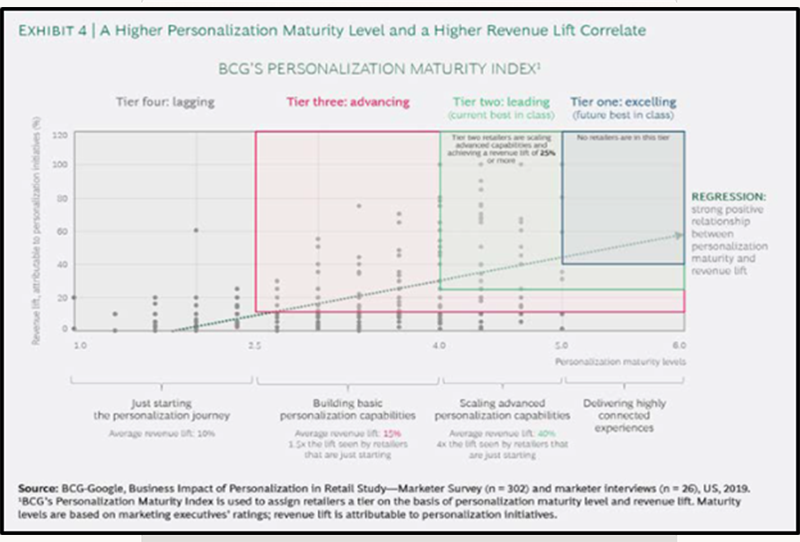
Conversion Rate Optimisation is not a tactic. It is a structured, ongoing discipline built on analysis, experimentation, learning, and iteration. Its objective is not merely to increase conversions, but to strengthen the entire digital experience by reducing friction, improving clarity, and enabling consumers to move forward with confidence. As expectations around relevance and personalisation continue to rise, CRO and web personalisation are becoming indispensable to sustained growth.
A simple search may define CRO as increasing the percentage of users who take a desired action. While accurate at a surface level, this definition understates the complexity of the process. In practice, CRO is far more granular and strategic, interrogating intent, behaviour, and experience across the full user journey.
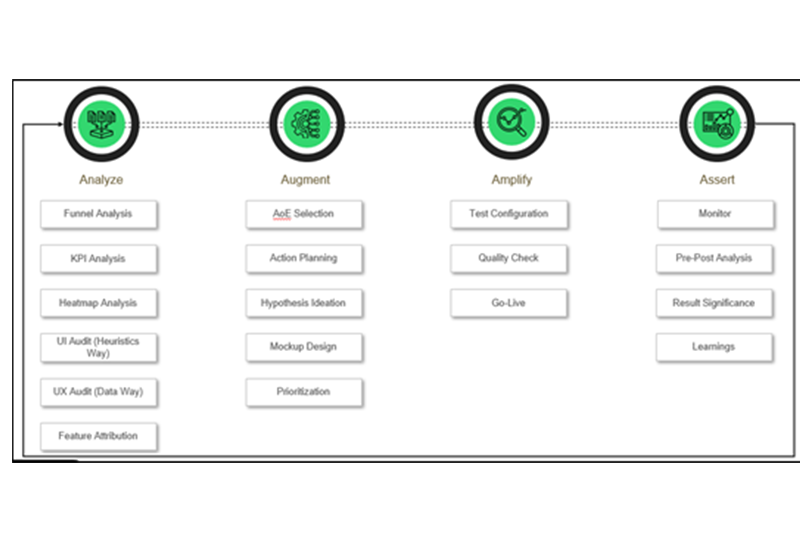
The 4A Framework
At Performics India, we approach CRO through a structured 4A framework designed to balance rigour with impact.
The first stage is Analyse. This goes far beyond visual assessments of UI or UX. We evaluate the entire user funnel using performance indicators, behavioural data, heatmaps, and session diagnostics to identify where confidence erodes and momentum breaks. The objective is clarity, not opinion.
This is followed by Augment. Here, we identify the areas most likely to benefit from intervention. The focus shifts to simplifying decision-making and improving hierarchy, messaging, and flow. This stage enables strong hypotheses grounded in data rather than cosmetic changes driven by assumptions.
The third stage is Amplify. We validate changes through structured A/B experimentation, beginning with controlled split tests and progressing to scaled rollouts based on performance. Rigorous monitoring, statistical validation, and pre- and post-analysis ensure that results deliver both commercial and experiential impact.
The final stage is Activation. Learnings from successful tests are systematically embedded into the wider digital ecosystem, from design systems and content frameworks to operating playbooks and decision-making models. Activation is where CRO become a sustained growth engine, turning insight into repeatable performance gains and long-term business value.
This process runs continuously by design. CRO never ends because user expectations never stand still.
Common Misconceptions That Stall Conversion Growth
Over time, certain misconceptions surface repeatedly. One of the most common is the belief that users drop off because they do not understand the product’s value. While this can happen, it is rarely the primary issue. More often, users understand the value clearly but encounter journeys so cluttered or unintuitive that the value gets diluted before completion.
In these moments, progress depends less on reinvention and more on precision. Small, deliberate changes often unlock disproportionate gains. A clearer call to action, a simplified step, improved hierarchy, or sharper language can restore momentum and rebuild confidence.
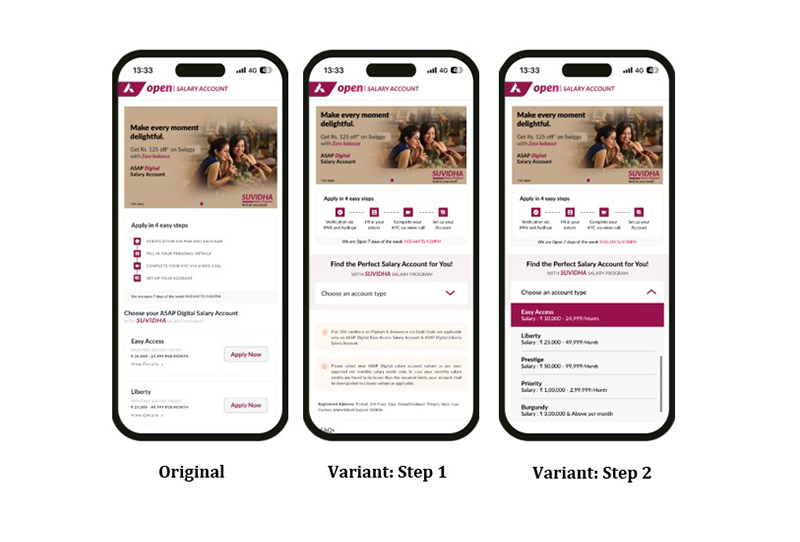
One of our clients, a large multinational bank, brought this challenge into sharp focus. Despite offering a clear and competitive salary account proposition, the digital journey introduced friction that prevented even high-intent users from completing the process. What should have been a straightforward decision became unnecessarily complex, turning intent into abandonment and quietly eroding potential revenue each day.
Our intervention centred on simplifying choice and restoring confidence in the journey. We introduced a clear, intuitive dropdown that allowed users to identify the most relevant account based on salary, removing ambiguity at the point of decision. We also strengthened directional cues by sharpening call-to-action elements, guiding users decisively through the next steps rather than leaving them to navigate uncertainty.
The impact was immediate and measurable. During the test period, account openings increased by approximately 30 per cent, while drop-offs reduced by 28 per cent. The outcome reinforced a core CRO truth: meaningful gains often come not from adding more, but from removing friction where it matters most.
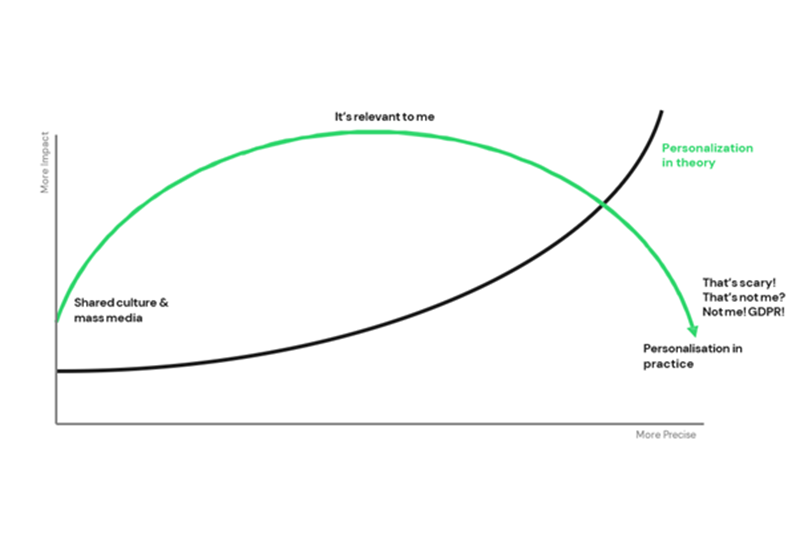
Another frequent misconception centres on personalisation. Many brands assume effective personalisation requires complex AI or machine learning systems. It begins with understanding user intent and prioritising clarity. Precision matters, but relevance matters more.
A leading telecom brand faced conversion challenges on its prepaid plans page. Analysis showed users did not disengage due to a lack of interest but because the experience made comparison difficult. We simplified the layout by replacing a horizontal carousel with a vertically stacked format that enabled easier evaluation and clearer prioritisation. The result was a 19 per cent increase in conversion rate and a 26 per cent rise in revenue per visitor.
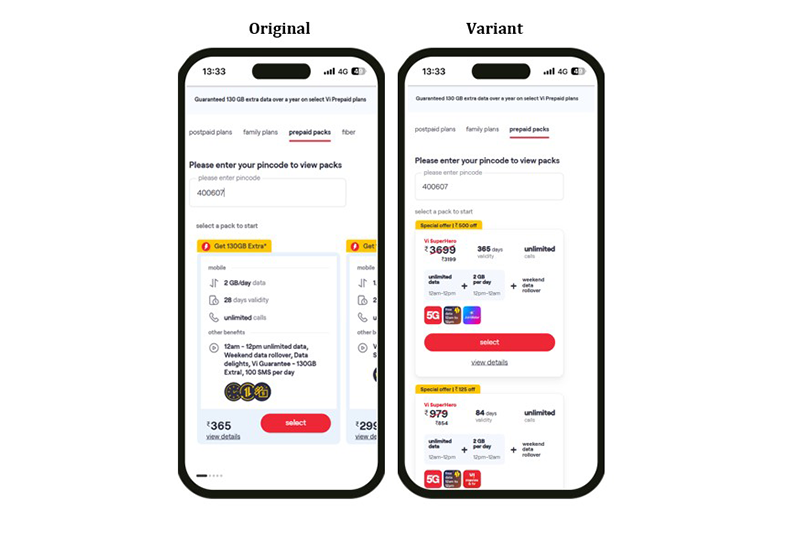
These outcomes reinforce a simple truth. CRO succeeds by removing friction, not by adding complexity. It earns conversions by respecting the user’s time, intent, and decision-making process.
When a digital experience fails to do justice to the product behind it, the cost compounds daily. Hidden revenue leaks accumulate quietly, often unnoticed until growth slows.
The question, then, is not whether CRO works. The question is whether brands are prepared to approach it with the rigour, patience, and strategic intent it demands.
For organisations facing similar challenges, a structured CRO assessment can uncover immediate opportunities and create a clear roadmap for sustained, experience-led conversion growth.
About the author:
Aditya Kumar is Associate, MarTech at Publicis Media
India